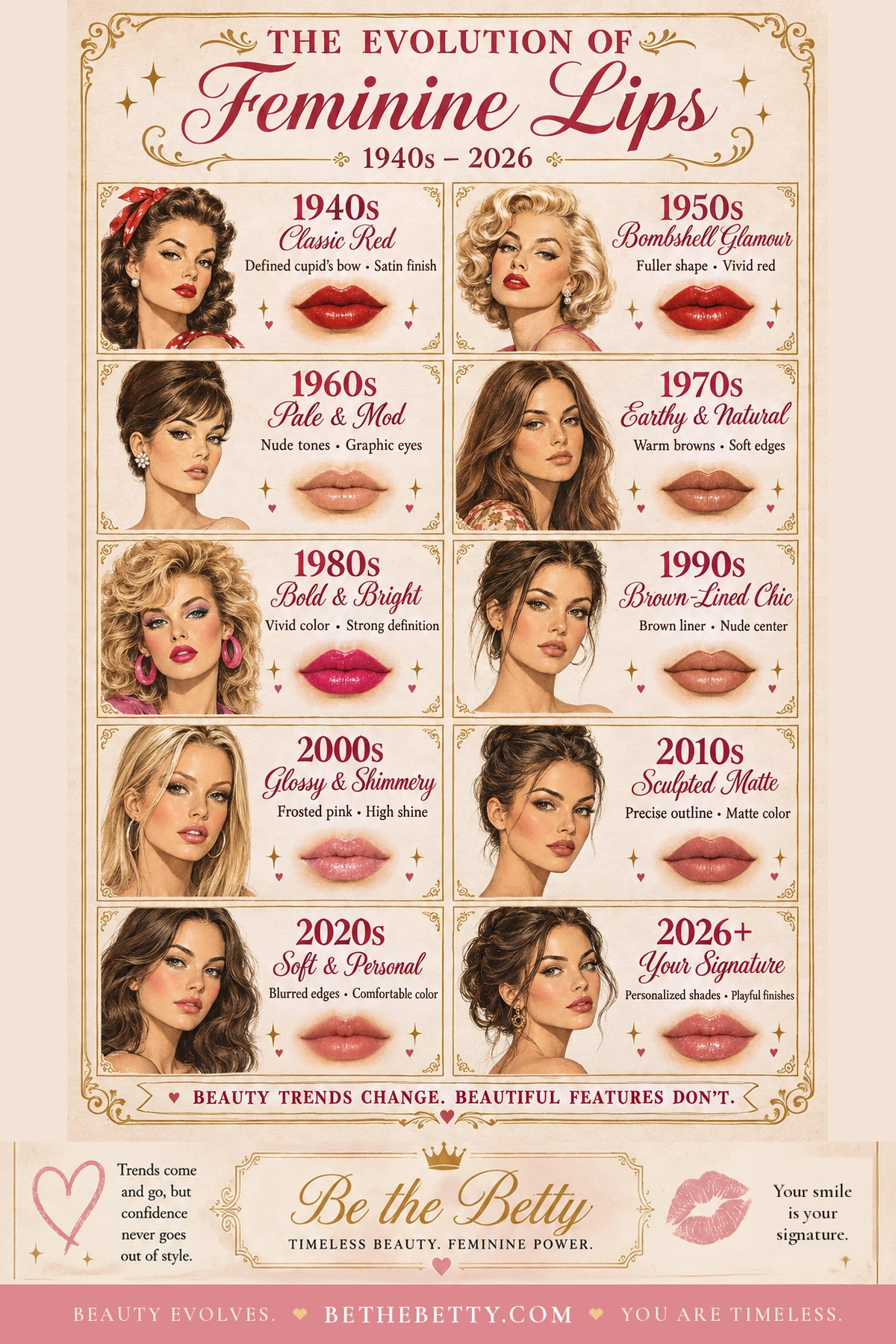
Lip Trends Through the Decades
The Evolution of Feminine Lips: A Timeline of Beauty Through the Decades
From classic red lipstick to glossy pink lips, discover how lip beauty trends evolved from the 1940s to today—and how to find your own signature look.
Beauty evolves. You are timeless.
Few beauty details have the power to transform a face quite like lipstick. A single swipe of color can make you feel polished, glamorous, playful, or effortlessly chic. Throughout history, lips have been more than just a canvas for color. They've reflected the fashion, culture, and feminine ideals of their time.
From the unmistakable red lips of the 1940s to today's personalized shades and blurred finishes, every decade has introduced its own interpretation of the perfect pout.
At Be the Betty, we believe in borrowing the best beauty secrets from every era while making them work for you. Let's take a journey through the evolution of feminine lips and discover what each decade can teach us about creating a beautiful, signature look.
1940s: Classic Red
The look: Defined Cupid's bow and a satin finish.
The 1940s were an era of polished femininity. Red lipstick became an iconic beauty staple, bringing color and confidence to carefully groomed faces. Even during wartime, lipstick offered women an accessible way to maintain a sense of glamour.
The signature look featured a precisely defined Cupid's bow, a softly rounded upper lip, and rich red pigment. The finish was often creamy or satin-like rather than ultra-glossy.
How to recreate the look:
- Choose a classic blue-red or true red lipstick.
- Use a lip pencil to emphasize your natural Cupid's bow.
- Apply color carefully, keeping the edges clean and defined.
- Blot lightly for a soft satin finish.
The Betty tip: Red lipstick is a timeless confidence booster. If a bold red feels intimidating, try a sheer red balm or stain to ease into the look.
1950s: Bombshell Glamour
The look: Fuller lips and vivid red color.
The 1950s embraced unapologetic glamour. Full skirts, sculpted hairstyles, winged eyeliner, and beautifully colored lips defined the era's feminine ideal.
Lipstick shades ranged from bright cherry red to deeper crimson, coral, and rosy pink. Lips were often carefully outlined and filled in to create a fuller, more pronounced shape.
The overall effect was polished, feminine, and unmistakably glamorous.
How to recreate the look:
- Select a rich red, cherry, or classic rose lipstick.
- Define the lip line with a coordinating pencil.
- Apply lipstick evenly for a smooth, saturated finish.
- Add a touch of gloss to the center of the lower lip if you prefer extra dimension.
The Betty tip: You don't need a dramatically different lip shape to achieve bombshell glamour. Precise outlining, even color, and a flattering shade can make your natural lips look beautifully defined.
1960s: Pale and Mod
The look: Nude tones and graphic eye makeup.
The 1960s brought a dramatic shift in beauty. Bold eyeliner, exaggerated lashes, and mod-inspired eye makeup took center stage. Lips often became softer and more understated to balance the intensity of the eyes.
Pale pinks, beige nudes, and light peach shades became popular, sometimes with a creamy or softly frosted finish.
This decade demonstrated an important beauty principle: when one feature takes center stage, another can become the supporting act.
How to recreate the look:
- Choose a nude lipstick with a pink, peach, or beige undertone that complements your complexion.
- Keep the lip shape softly defined.
- Pair your lipstick with graphic eyeliner or statement lashes.
- Avoid choosing a nude that washes out your natural coloring.
The Betty tip: Pale lipstick can look chic, but the right undertone makes all the difference. If beige nudes make you look tired, experiment with rosy or peachy nudes instead.
1970s: Earthy and Natural
The look: Warm browns and softly defined edges.
The 1970s introduced a more relaxed approach to beauty. Earthy colors, sun-kissed complexions, natural textures, and flowing hairstyles influenced the decade's aesthetic.
Lip colors included warm browns, caramel, cinnamon, terracotta, and muted rose. Rather than emphasizing an extremely precise outline, the look often felt softer and more natural.
This was an era of understated sensuality, where makeup enhanced the face without always appearing meticulously constructed.
How to recreate the look:
- Try warm brown, caramel, or terracotta lipstick.
- Choose a creamy or satin texture.
- Use a lip liner close to your natural lip color.
- Blend the edges gently for a softer finish.
The Betty tip: Earthy shades can add warmth and sophistication to your appearance. Experiment with different depths of brown and rose until you find one that enhances your natural coloring.
1980s: Bold and Bright
The look: Vivid color and strong definition.
The 1980s were all about making a statement. Fashion became bolder, hairstyles grew bigger, and makeup embraced vivid color.
Fuchsia, bright pink, vibrant red, and other saturated shades brought energy to the face. Strong lip definition helped create a polished, high-impact look.
Subtlety wasn't the objective. The lips were meant to be noticed.
How to recreate the look:
- Experiment with bright fuchsia, hot pink, or vivid red.
- Define the lip line with a coordinating pencil.
- Choose a creamy or glossy finish for a distinctly retro effect.
- Keep your application neat so the color remains the star.
The Betty tip: Bright lipstick doesn't have to mean a full face of dramatic makeup. Pair a vivid lip with softly defined eyes and a fresh complexion for a modern interpretation of eighties glamour.
1990s: Brown-Lined Chic
The look: Brown liner and a lighter nude center.
The 1990s brought a distinctive lip combination that remains recognizable today: brown lip liner paired with a lighter nude, beige, or pink lipstick.
The contrast created the appearance of depth and definition, while matte and satin textures complemented the decade's minimalist fashion and smoky eye makeup.
From soft taupe to deep chocolate, brown liner became an essential tool for creating a sculpted pout.
How to recreate the look:
- Select a brown liner that complements your lipstick and skin tone.
- Outline your lips, following their natural shape.
- Blend the liner slightly inward to avoid a harsh border.
- Fill the center with a lighter nude or pink lipstick.
- Blend the transition for a seamless finish—or keep a little contrast for a more retro look.
The Betty tip: The secret to a flattering brown-lined lip is choosing the right depth of contrast. A liner that's too dark can overwhelm the face, while a complementary brown creates natural-looking dimension.
2000s: Glossy and Shimmery
The look: Frosted pink and high shine.
The early 2000s brought a playful, ultra-glossy approach to lip beauty. Shimmering pinks, pearly nudes, frosted finishes, and shiny lip glosses were everywhere.
The aesthetic was youthful, fresh, and a little futuristic. Lips often appeared lighter and more reflective, with gloss adding shine and dimension.
This was the era of the glossy pout: a beauty look that felt fun rather than overly serious.
How to recreate the look:
- Choose a pink or nude lipstick with a pearlescent finish.
- Apply a clear or pink gloss over the top.
- Concentrate extra shine toward the center of the lips.
- Pair the look with softly shimmering eyeshadow for a nostalgic early-2000s finish.
The Betty tip: Gloss can make lips appear fuller by reflecting light. For a more modern effect, try a sheer pink gloss over a neutral lip liner rather than layering multiple frosted products.
2010s: Sculpted Matte
The look: Precise outlines and matte color.
The 2010s popularized highly defined, sculpted lips. Matte liquid lipsticks, full-coverage color, and carefully drawn outlines became major beauty trends.
Nude pinks, mauves, dusty roses, and deeper berry shades offered a wide range of options. Lip liner was often used to refine the shape, and matte formulas delivered an intense, long-lasting finish.
The emphasis was on precision, symmetry, and a perfectly finished appearance.
How to recreate the look:
- Gently exfoliate dry lips when needed and apply a moisturizing lip balm.
- Blot away excess balm before applying matte color.
- Use a matching lip pencil to refine your natural outline.
- Apply lipstick in thin, even layers.
- Clean up the edges with a small brush if necessary.
The Betty tip: A sharply defined lip can be beautiful, but your natural shape is a great starting point. Rather than forcing perfect symmetry, focus on creating a balanced outline that suits your face.
2020s: Soft and Personal
The look: Blurred edges and comfortable color.
Recent beauty trends have embraced a more relaxed approach to lipstick. Softly blended edges, tinted balms, creamy lipsticks, sheer stains, and comfortable formulas have become popular alternatives to highly structured finishes.
The focus is less about achieving one universally fashionable lip and more about finding a look that feels authentic to you.
A blurred rose lip, a softly stained berry pout, or a natural pink balm can all be beautiful choices.
How to recreate the look:
- Apply lipstick to the center of your lips.
- Blend outward with a fingertip or small brush.
- Choose a shade close to your natural lip color for an understated effect.
- Finish with balm or a comfortable satin formula.
- Let the edges remain soft rather than perfectly outlined.
The Betty tip: A softly blurred lip is wonderfully forgiving. It's an easy way to wear color without worrying about maintaining a perfectly crisp outline throughout the day.
2026 and Beyond: Your Signature Lip
The look: Personalized shades and playful finishes.
The next chapter of lip beauty isn't about following a single set of rules. It's about using the techniques, textures, and colors you love to create a look that feels uniquely yours.
Maybe your signature is a perfectly applied red lipstick. Perhaps you prefer a glossy pink, a softly blurred rose, or a sophisticated brown-lined nude.
You can borrow the Cupid's bow of the 1940s, the bombshell color of the 1950s, the nude palette of the 1960s, or the gloss of the 2000s. You can combine them, reinterpret them, or ignore them entirely.
The beauty of having so many decades of inspiration is that you get to choose.
How to create your signature lip:
- Find your flattering colors. Experiment with reds, pinks, berries, nudes, and browns to discover which shades complement your natural coloring.
- Choose your favorite finish. Matte, satin, glossy, creamy, and sheer formulas each create a different effect.
- Learn your lip shape. Understanding your natural Cupid's bow, fullness, and proportions makes it easier to apply color in a flattering way.
- Consider the occasion. A bold red may feel perfect for an evening out, while a tinted balm might suit your everyday routine.
- Make it your own. The best lip look is one you enjoy wearing.
The Betty tip: Your signature lip doesn't need to be complicated or expensive. A flattering shade, a comfortable formula, and a little practice can become the foundation of your personal beauty style.
How to Choose the Right Lipstick for You
With so many shades and finishes to choose from, finding the right lipstick can feel overwhelming. Start with these simple guidelines.
1. Consider Your Undertone
Your skin's undertone can help you identify shades worth trying. Blue-reds, warm corals, rosy pinks, and earthy nudes can all be beautiful, depending on your complexion and personal preferences.
These are starting points, not strict rules. A shade that breaks the conventional guidelines may still look wonderful on you.
2. Think About Contrast
A bold lipstick creates more contrast with your natural lip color, while a sheer shade offers a softer effect. Neither is inherently better.
If you love vintage glamour, experiment with saturated reds. If you prefer understated beauty, try a rose or nude close to your natural coloring.
3. Match the Finish to Your Preferences
- Matte: Defined, modern, and often highly pigmented.
- Satin: Smooth color with a subtle sheen.
- Glossy: Reflective shine and a fuller-looking effect.
- Sheer: A natural wash of color.
- Creamy: Comfortable color with a soft, polished finish.
You can also combine finishes, such as adding gloss over lipstick or blending a matte shade with balm.
4. Give Your Lips a Little Care
Lipstick looks best when your lips feel comfortable. Use a moisturizing balm, avoid aggressive exfoliation, and protect your lips from environmental exposure. If a product causes persistent irritation, discontinue it.
A smooth, comfortable base helps lipstick apply more evenly, regardless of the decade you're trying to recreate.
The Timeless Beauty Lesson
Lip trends will continue to evolve. Formulas will change, new colors will become fashionable, and old favorites will inevitably return.
But the most interesting thing about the history of lipstick is how much room there is for individuality.
The 1940s taught us the power of a classic red. The 1950s celebrated bombshell glamour. The 1960s showed us the beauty of contrast. The 1970s embraced earthy tones, the 1980s celebrated vivid color, and the 1990s perfected the art of lip definition.
The 2000s brought back the shine, the 2010s championed precision, and the 2020s made comfort and personal expression central to the conversation.
Every era offers something worth borrowing. None of them has to dictate how you wear your lipstick today.
At Be the Betty, our philosophy is simple: unconventional methods for traditional beauty. Learn the classics, experiment with the trends, and keep what makes you feel beautiful.
Because trends come and go, but confidence never goes out of style.
Beautiful lips. Beautiful you.
Explore more vintage beauty inspiration and practical beauty tips at BeTheBetty.com.